Im developing
http://www.armchairhistory.com
hint:its not about armchairs
Monday, September 29, 2008
Thursday, September 25, 2008
Update
I stopped working on this blog because I wasn't happy with the traffic [it gets about 30 a day now], but I plan in a few months to launch a huge database of archaeological images, so stay tuned!
In the meantime, I've made my first prac website, Quote Maniac
http://www.quotemaniac.com,
feedback appreciated!
In the meantime, I've made my first prac website, Quote Maniac
http://www.quotemaniac.com,
feedback appreciated!
Thursday, October 25, 2007
Images of the Synagogue of Capernaum
The Synagogue of Capernaum, the hometown of Jesus, dates from the fourth or Fifth Centuries CE. However, their are remains underneath that are thought to be that of a first Certury Synagogue. If this is the case Jesus of Nazareth would have been frequently teaching here.


Greek writing on some of the columns of the synagogue


Credit for the column inscriptions: eweb93

Credit: jcwrenn

Credit: ladyhawke
Below: The remains of what was likely the original first century synagogue.

Credit: two wubbeles (es)

Credit: Prora
The Mosaic floor of the 4th century synagogue:

Credit: Prora
Greek writing on some of the columns of the synagogue


Credit for the column inscriptions: eweb93

Credit: jcwrenn

Credit: ladyhawke
Labels:
Israel Sites
Wednesday, October 24, 2007
Images of Baalbek Lebanon
Baalbek is a city established by the Phoenicians. It is located in Eastern Lebanon, fairly close to the border with Syria. Although established by Phoenicians, the visible ruins extend from the Roman period.
Entry to the Temple of Bacchus
Exterior of the temple of Bacchus
Credit: bjchrist
Credit: east med wanderer

A little bit of perspective on the size of the temple
Credit: becklectic
Ceiling pics:
.jpg)
Credit: itfcfan
.jpg)

Credit: izio 5
This is the remains of the temple to jupiter
Credit:thriol
Credit: ivanrabano

.jpg)
.jpg)

Credit: itfcfan
Entry to the Temple of Bacchus
Exterior of the temple of Bacchus
Credit: bjchrist
Credit: east med wanderer
A little bit of perspective on the size of the temple
Credit: becklecticCeiling pics:
.jpg)
Credit: itfcfan.jpg)

Credit: izio 5 This is the remains of the temple to jupiter
Credit:thriol
Credit: ivanrabano
.jpg)
.jpg)

Credit: itfcfan Take a look at this site:
Labels:
Lebanon Sites,
Temples
Monday, October 22, 2007
The Step pyramid of Djoser at Saqqara


Credit: Flickr members blaine and felicia
The step pyramid of Djoser at Saqqara
-Egypt's first pyramid, dated: 2750 BCE!
-Here limestone was first used on a large scale as a construction material
-Height: 62 metres (203 ft)
- was built for the burial of Pharaoh Djoser-Netjerikhet by his Vizier Imhotep.
-Located at the Saqqara necropolis to the northwest of the city of Memphis, and is the central feature of a vast mortuary complex in an enormous courtyard surrounded by ceremonial structures and decoration.
-Egypt's first pyramid, dated: 2750 BCE!
-Here limestone was first used on a large scale as a construction material
-Height: 62 metres (203 ft)
- was built for the burial of Pharaoh Djoser-Netjerikhet by his Vizier Imhotep.
-Located at the Saqqara necropolis to the northwest of the city of Memphis, and is the central feature of a vast mortuary complex in an enormous courtyard surrounded by ceremonial structures and decoration.
Labels:
Egyptian Sites
An introduction to Saqqara
I will be uploading next photos I can gather of Saqqara. Here is a summary of Saqqara and it's sites from Wikipedia:
BRIEF NOTES
While Memphis was the capital of Ancient Egypt, Saqqara served as its necropolis. Although it was eclipsed as the burial ground of royalty by Giza and later by the Valley of the Kings in Thebes, it remained an important complex for minor burials and cult ceremonies for more than 3,000 years, well into Ptolemaic and Roman times. The step pyramid at Saqqara was designed by Imhotep for King Djoser (c.2667-2648 BC). It is the oldest complete hewn-stone building complex known in history. It is also the location of the newly opened (in 2006) Imhotep Museum.
Gisr el-mudir this massive enclosure may date from the Early Dynastic period.
Sekhemkhet's Step Pyramid (the Buried Pyramid)
Step Pyramid of Netjerikhet Djoser
Shepseskaf's Mastabat Fara'un
Userkaf's pyramid, now looking like a conical hill.
Djedkare Isesi pyramid complex, known as Haram el-Shawaf.
Unas pyramid complex, now mainly collapsed.
Teti's pyramid complex, looking more like a small hill, rather than a man-made construction.
Pepi I complex, with its associated queens pyramids.
Merenre's complex
Pepi II, last great pyramid built in the Old Kingdom.
Ibi, built in the Eighth dynasty, it is now almost totally destroyed.
There are a few pyramids that date from the First Intermediate Period, the most notable being Khendjer's Pyramid in South Saqqara.
New Kingdom Necropolis
While most of the mastabas date from the Old Kingdom, one major figure from the New Kingdom is also represented: Horemheb, the last pharaoh of the 18th Dynasty, who had a tomb built here for himself before he assumed the throne in his own right, while still serving as one of Tutankhamun's generals. However, it should be noted that Pharaoh Horemheb was never buried here. After his death he was interred, as were many other 18th Dynasty kings, in the Valley of the Kings in Ancient Thebes.
Later Burials and Monuments
Another major monument at Saqqara is the Serapeum: a gallery of tombs, cut from the rock, which served as the eternal resting place of the mummified bodies of the Apis bulls worshipped in Memphis as embodiments of the god Ptah. Rediscovered by Auguste Mariette in 1851, the tombs had been opened and plundered in antiquity – with the exception of one that lay undisturbed for some 3,700 years. The mummified bull it contained can now be seen in Cairo's agricultural museum.
On the approach to the Serapeum stands the slightly incongruous arrangement of statues known the Philosophers' Circle: a Ptolemaic recognition of the greatest poets and thinkers of their Greek ancestors, originally situated in a nearby temple. Represented here are Hesiod, Homer, Pindar, Plato, and others.
BRIEF NOTES
While Memphis was the capital of Ancient Egypt, Saqqara served as its necropolis. Although it was eclipsed as the burial ground of royalty by Giza and later by the Valley of the Kings in Thebes, it remained an important complex for minor burials and cult ceremonies for more than 3,000 years, well into Ptolemaic and Roman times. The step pyramid at Saqqara was designed by Imhotep for King Djoser (c.2667-2648 BC). It is the oldest complete hewn-stone building complex known in history. It is also the location of the newly opened (in 2006) Imhotep Museum.
History
Early Dynastic
View of Saqqara necropolis, including Djoser's step pyramid (centre). The mound to the far left is the Pyramid of Unas; the one on the right is the Pyramid of Userkaf.
Although the earliest burials of nobles at Saqqara can be traced back to the First Dynasty, it was not until the Second Dynasty that the first kings were buried there, including Hotepsekhemwy and Nynetjer.
View of Saqqara necropolis, including Djoser's step pyramid (centre). The mound to the far left is the Pyramid of Unas; the one on the right is the Pyramid of Userkaf.
Although the earliest burials of nobles at Saqqara can be traced back to the First Dynasty, it was not until the Second Dynasty that the first kings were buried there, including Hotepsekhemwy and Nynetjer.
Old Kingdom
The most striking feature of the necropolis, however, dates from the Third Dynasty. Still visible today, is the Step Pyramid of the Pharaoh Djoser. In addition to Djoser's, there are another 16 pyramids on the site, in various states of preservation or dilapidation. That of the fifth-dynasty Pharaoh Unas, located just to the south of the step pyramid and on top of Hotepsekhemwi's tomb, houses the earliest known example of the Pyramid Texts – inscriptions with instructions for the afterlife used to decorate the interior of tombs, the precursor of the New Kingdom Book of the Dead. Saqqara is also home to an impressive number of mastaba tombs. Because the necropolis was lost beneath the sands for much of the past two millennia – even the sizable mortuary complex surrounding Djoser's pyramid was not uncovered until 1924 – many of these have been superbly preserved, with both their structures and lavish internal decorations intact.
Major Old Kingdom structures
Gisr el-mudir this massive enclosure may date from the Early Dynastic period.
Sekhemkhet's Step Pyramid (the Buried Pyramid)
Step Pyramid of Netjerikhet Djoser
Shepseskaf's Mastabat Fara'un
Userkaf's pyramid, now looking like a conical hill.
Djedkare Isesi pyramid complex, known as Haram el-Shawaf.
Unas pyramid complex, now mainly collapsed.
Teti's pyramid complex, looking more like a small hill, rather than a man-made construction.
Pepi I complex, with its associated queens pyramids.
Merenre's complex
Pepi II, last great pyramid built in the Old Kingdom.
Ibi, built in the Eighth dynasty, it is now almost totally destroyed.
There are a few pyramids that date from the First Intermediate Period, the most notable being Khendjer's Pyramid in South Saqqara.
New Kingdom Necropolis
While most of the mastabas date from the Old Kingdom, one major figure from the New Kingdom is also represented: Horemheb, the last pharaoh of the 18th Dynasty, who had a tomb built here for himself before he assumed the throne in his own right, while still serving as one of Tutankhamun's generals. However, it should be noted that Pharaoh Horemheb was never buried here. After his death he was interred, as were many other 18th Dynasty kings, in the Valley of the Kings in Ancient Thebes.
Later Burials and Monuments
Another major monument at Saqqara is the Serapeum: a gallery of tombs, cut from the rock, which served as the eternal resting place of the mummified bodies of the Apis bulls worshipped in Memphis as embodiments of the god Ptah. Rediscovered by Auguste Mariette in 1851, the tombs had been opened and plundered in antiquity – with the exception of one that lay undisturbed for some 3,700 years. The mummified bull it contained can now be seen in Cairo's agricultural museum.
On the approach to the Serapeum stands the slightly incongruous arrangement of statues known the Philosophers' Circle: a Ptolemaic recognition of the greatest poets and thinkers of their Greek ancestors, originally situated in a nearby temple. Represented here are Hesiod, Homer, Pindar, Plato, and others.
Labels:
Egyptian Sites
Pyramid of Menkaure
-The third and smallest of the pyramids of Giza
-Originally had a height of 65.5 meters, now stands 62 m

Credit: erikmac
Credit: jenrberry 
-Originally had a height of 65.5 meters, now stands 62 m

Credit: erikmac
Credit: jenrberry 
Credit: Noo
Labels:
Egyptian Sites
Images of the Great pyramid (Khufu)
The Great Pyramid
Height: Originally 146.6 meters, now stands 138.8 meters
Diagram of the inside of the Great Pyramid. You can zoom in.

Height: Originally 146.6 meters, now stands 138.8 meters
Diagram of the inside of the Great Pyramid. You can zoom in.

King Khufu, the constructor of the Great Pyramid

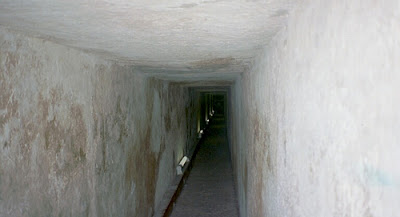
I'm still looking for royalty free images of inside the pyramid, if anyone knows of such, please email me damascan77 at hotmail dot com
Labels:
Egyptian Sites
Subscribe to:
Posts (Atom)